Banco de Moçambique’s July bulletins show a flat rate; its own half-year figures show who actually receives the dollars.
The reference mean dollar rate averaged MT63.91 across the 23 bulletins Banco de Moçambique published for July 2026, but the more useful number came from the Comité de Política Monetária on 29 July: the fuel sector absorbed half of the foreign currency that banks sold to their largest customers in the first six months of the year. For a business outside fuel, that is the share of the queue it is not standing in.
The same briefing, as reported by O Económico, put commercial banks’ foreign exchange purchases at US$4.24bn in the half-year, up US$352m, with interbank sales of US$4.16bn. Supply was large. The question for each firm is where it sits in the allocation.
The July bulletin and the July counter
Bureaus sold at MT70.86 on 31 July; banks sold at MT64.59.
The reference mean stood at MT63.90 on 1 July and at MT63.91 on 31 July, with two days in between at MT63.92, the highest mean printed in the first seven months of the year. The rand cross drifted from MT3.89 to MT3.86 over the month, within a range of MT3.79 to MT3.96.
The August statistical summary prints the 31 July quotes: banks MT63.33 and MT64.59, bureaus MT69.34 and MT70.86. The bureau selling rate was 9.7% above the banks’, a little wider than June’s 9.5%. Net reserves ended July at US$3,436.8m, a fall of US$27m on the month, and cover excluding large projects was 4.3 months.
How allocation works when one sector takes half
Priority sectors clear first; everyone else queues behind them.
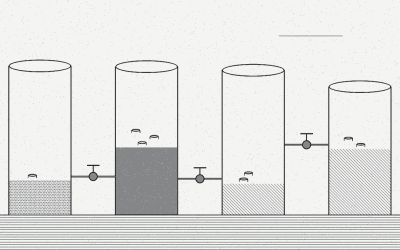
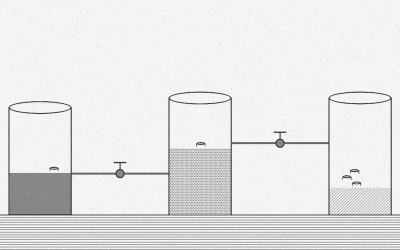
The bank-by-bank mechanics are simple. A commercial bank buys dollars from exporters and from the central bank, then sells them to customers in an order set by its own risk rules and by regulation. If one customer class, fuel importers paying international suppliers, takes half of the dollars sold to large buyers, the remainder is split among every other importer, manufacturer, airline and service payer.
That is not a criticism of the priority. Fuel is the input behind transport, farming and food prices, so a government and a central bank have good reason to keep it supplied. It is a description of the arithmetic that a manufacturer’s treasurer faces when the bank says the dollars will be available next week.
A second tightening on the retail side
The annual cap on card spending abroad was halved effective 28 July.
Observador, drawing on Lusa, reported on 12 August that Aviso n.º 4/GBM/2026, in force from 28 July, reduces the annual limit on bank-card payments in foreign operations from MT6m to MT3m. Banks must verify a customer’s status with the central bank before issuing or renewing cards and must block foreign use once the limit is reached.
Card spending abroad is a channel many small firms use to pay for software, advertising and supplies when bank transfers stall. Halving the cap pushes more of that demand toward the queue or the bureaus, at the MT70.86 end of the spread.
Position by queue, not by rate
The decisive variable is your bank’s settlement time.
Companies outside fuel should ask their bank for its average settlement time for foreign payments in July, in working days, and record it. Where it exceeds the supplier’s credit terms, renegotiate terms before they lapse, because the premium of roughly 9.7% is the cost of skipping the wait. Fuel importers and exporters with dollar income are the exceptions, since both already sit near the front of the allocation.
Companies that pay online suppliers by card should move recurring charges to bank transfers now and keep a margin below the new MT3m cap. Then record July’s gap between bank and bureau selling rates, MT6.27 per dollar, as the baseline against which August is judged.
Sources
- Banco de Moçambique. “Taxas de Câmbio de Referência do Mercado Cambial do dia 01072026”. 1 July 2026. https://www.bancomoc.mz/media/25ebxgqc/taxas-de-c%C3%A2mbio-de-refer%C3%AAncia-do-mercado-cambial-do-dia-01072026.pdf
- Banco de Moçambique. “Taxas de Câmbio de Referência do Mercado Cambial do dia 31072026”. 31 July 2026. https://www.bancomoc.mz/media/fg5hcffn/taxas-de-c%C3%A2mbio-de-refer%C3%AAncia-do-mercado-cambial-do-dia-31072026.pdf
- Banco de Moçambique. “Resumo Mensal de Informação Estatística – Agosto de 2026 (dados de Julho)”. September 2026. https://www.bancomoc.mz/media/vctd52gy/resumo-mensal-de-informa%C3%A7%C3%A3o-estat%C3%ADstica-agosto_2026.pdf
- O Económico. “Banco De Moçambique Mantém MIMO Em 9,25% E Transfere Aperto Para A Liquidez Bancária”. 29 July 2026. https://www.oeconomico.com/banco-de-mocambique-mantem-mimo-em-925-e-transfere-aperto-para-a-liquidez-bancaria/
- Observador (Lusa). “Banco de Moçambique reduz para metade limite de pagamentos com cartão no exterior”. 12 August 2026. https://observador.pt/2026/08/12/banco-de-mocambique-reduz-para-metade-limite-de-pagamentos-com-cartao-no-exterior/