The instant-payment rail is operational. October’s figures will show whether it is changing who carries Mozambique’s transfers.
Mozambique’s instant-payment system, METIX, has been operational since March 2026, and by late July it was handling more than 11,000 transfers a day, three times its starting level. What has not yet been shown is whether the rail is moving money in new patterns or only moving the old patterns faster. The October 2026 payment-data cycle is the next place to look for that evidence.
A standard is a legal fact on the day it is published and an economic fact only once traffic crosses it. Banco de Moçambique (BdM) made the legal fact on 25 February 2026, when it issued its Aviso n.º 1/GBM/2026, which set up the instant-payments system known as SPIM and approved the regulation that governs it. The questions for October are about behaviour: which networks exchange money with which, in what volume, and whether the market’s concentration changes.
What exists today, and what is only planned
METIX is operational. Wider participation, new use cases and any change in concentration are still ahead.
Under the Aviso, as summarised by RSM Mozambique, SPIM is run by Sociedade Interbancária de Moçambique (SIMO) as the central infrastructure for instant payments between participants. Credit institutions and payment service providers may join directly or through a direct participant. Participation is mandatory for electronic money institutions running mobile wallets, and for credit institutions with at least 5,000 active clients or accounts or 10,000 annual transactions.
The launch on 16 March brought in, according to AIM’s report, 15 commercial banks, 12 microbanks and the three wallet operators M-Pesa, e-Mola and m-Kesh. Transfers run around the clock through apps, bank sites and USSD, which needs no data connection. The daily ceiling is MT 200,000 per individual and MT 500,000 per company, and individuals pay no fee or commission on a transfer.
How a transfer actually moves
One switch sits between two institutions’ ledgers, and it is the switch’s logs that make behaviour measurable.
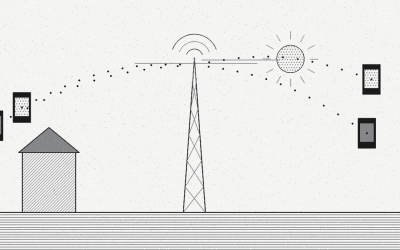
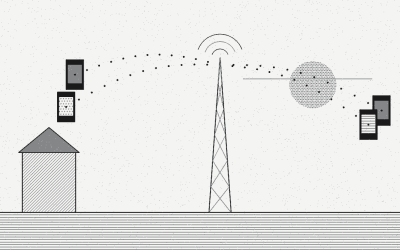
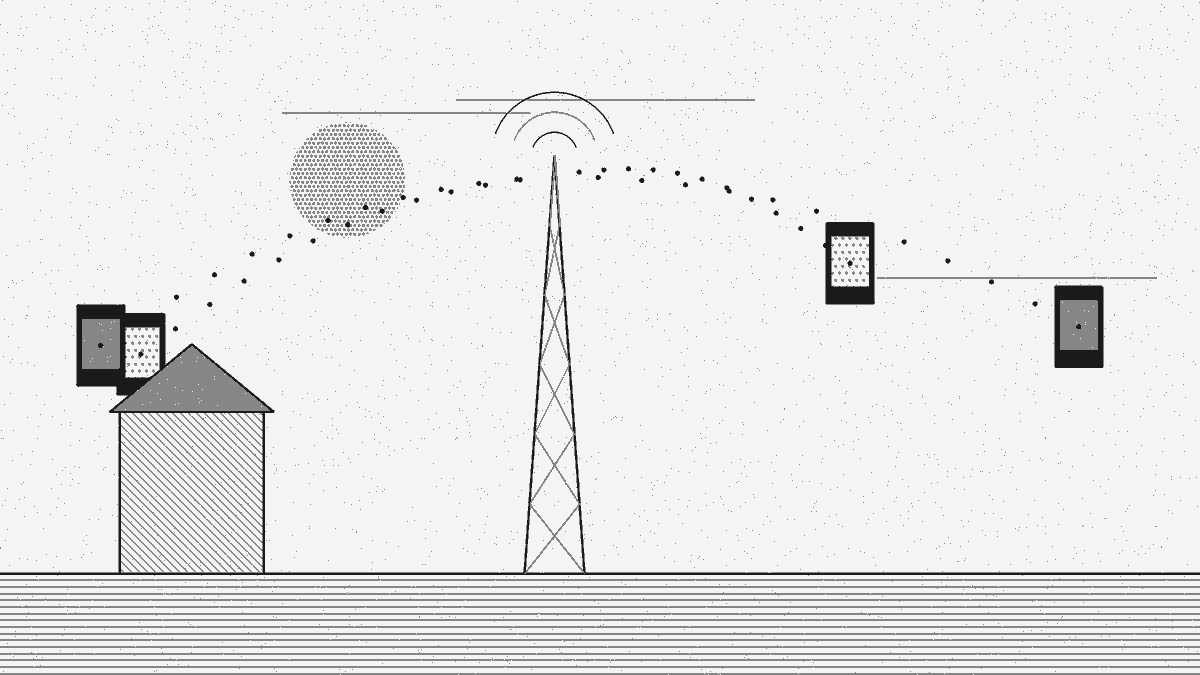
The route, as AfricaNenda’s 2025 case study describes SIMO’s network, begins when the sender instructs their institution. That institution checks identity and available funds, sends the instruction through an interface to the SIMO switch, and the switch routes it to the receiving institution, which verifies the account and credits it. Both sides are then notified. SIMO is jointly owned by BdM, which holds the majority, and commercial banks; BdM is the settlement agent and all direct participants hold settlement accounts with it.
That architecture is why the data can answer behavioural questions. Every transfer passes one logging point, tagged by sender institution and receiver institution. A bank-to-wallet transfer in the log is a transfer that, before common rails, needed a cash-in at an agent or a bilateral deal between two firms. The same case study notes that before cross-domain interoperability, bilateral agreements often reflected the commercial power of the institutions involved.
The baseline October will be compared with
In 2024, wallet-to-wallet traffic made up 92% of SIMO volume. The bridge between banks and wallets was small.
AfricaNenda reports that SIMOrede processed about 1.1 billion transactions in 2024, up from roughly 22 million in 2020, and that mobile-money-to-mobile-money transfers were 92% of 2024 volume. Bank-to-bank transfers and bank-wallet transfers were about 4% each. Bank-wallet transactions had risen from 244 in 2022 to 43 million in 2024.
For scale, and this is our arithmetic, 1.1 billion transactions is about 3 million a day, and 43 million bank-wallet transactions is about 118,000 a day. METIX’s 11,000-plus daily transfers, reported by Executive Digest on 30 July, are a different and newer product and are not a like-for-like share of that total. They show only that the rail is small relative to the wallet economy and growing fast.
Three tests for the October figures
Count the bridge, the spread of senders and the cost that remains.
First, the bridge. The share of volume that crosses between banks and wallets, measured against the 4% bank-wallet share of 2024, tells us whether free person-to-person transfers are creating a new flow. A rising share with a steady wallet-to-wallet core would mean banks and wallets are exchanging customers’ money instead of competing for it.
Second, the senders. Mozambique’s rail has 19 direct participants in AfricaNenda’s count, three of them wallet operators, and the case study says the board is made up of banks, with e-money issuers present on the network but not as shareholders. If October’s logs show a handful of institutions originating most instant transfers, interoperability exists on paper while concentration persists. If originations broaden toward microbanks and smaller banks, the standard is working as a leveller.
Third, the cost that remains. The fee waiver covers transfers by individuals, so business payments are where revenue models will be tested. Watch whether transaction counts for merchant and business payments grow alongside free person-to-person traffic, since that is where banks and wallets will look for revenue.
What businesses should do before the data lands
Prepare to be paid and to pay on the new rail, and ask your bank for its own numbers.
Retailers, school operators, transporters and wholesalers who take transfers should publish an account number or wallet number that works for METIX payers, and check the MT 500,000 company ceiling before quoting large invoices as instant payments. A business that collects from customers by wallet should ask its bank whether incoming METIX transfers can be reconciled automatically, because that determines whether an invoice can be closed within seconds.
Banks and fintechs should write their October reviews now: ask their own switch reports for the count of bank-wallet transfers, the share of originations by institution, and the average ticket against the MT 200,000 limit. When BdM and SIMO publish their cycle, the firms that already hold their own baseline will see first whether the market has moved.
Sources
- Banco de Moçambique. “Aviso n.º 1/GBM/2026 cria o Sistema de Pagamentos Instantâneos de Moçambique e aprova o respectivo regulamento”. 27 February 2026. https://www.bancomoc.mz/pt/media/noticias/aviso-n-%C2%BA-1-gbm-2026-cria-o-sistema-de-pagamentos-instant%C3%A2neos-de-mo%C3%A7ambique-e-aprova-o-respectivo-regulamento/
- RSM Mozambique. “Criação do Sistema de Pagamentos Instantâneos de Moçambique (SPIM)”. 2026. https://www.rsm.global/mozambique/pt-pt/news/criacao-do-sistema-de-pagamentos-instantaneos-de-mocambique-spim
- AIM. “Banco Central lança sistema de pagamentos instantâneos”. 16 March 2026. https://aimnews.org/2026/03/16/banco-central-lanca-sistema-de-pagamentos-instantaneos/
- Executive Digest. “Novo sistema de transferências instantâneas moçambicano opera 11 mil operações por dia”. 30 July 2026. https://executivedigest.sapo.pt/novo-sistema-de-transferencias-instantaneas-mocambicano-opera-11-mil-operacoes-por-dia/
- AfricaNenda Foundation. “SIIPS 2025 Case Study: SIMO Mozambique”. November 2025. https://www.africanenda.org/uploads/files/siips2025/siips_2025_SIMO-Mozambique_CaseStudy_en.pdf