Transfers and cash conversion carry the wallet economy; merchant and bill payments are still the thin slice.
Mozambique’s three electronic money institutions processed 321.3 million transactions worth MT199.4bn in January 2026, an average of MT621 each, according to the Banco de Moçambique monthly statistical summary. Against January 2025, when the same statistics recorded 232.9 million operations and MT150.6bn, the count is up 38% and the value up 32%.
The value sits 31% below the MT290bn wallets moved in December 2025, which is the seasonal drop a payments desk should expect after the festive month. The more useful reading is the mix. Person-to-person transfers supplied 170.9 million operations and MT105.1bn, just over half of everything. Payments for services, the category nearest to a shop till or a utility bill, reached 24.8 million operations but only MT3.4bn: MT138 a payment.
Cash in, cash out and the MT22bn gap
More physical money entered the wallet system in January than left it.
Deposits, the operation in which a customer hands notes to an agent and receives e-money, ran to 82.2 million transactions worth MT56.5bn, an average of MT687. Withdrawals, the reverse, came to 43.3 million transactions and MT34.4bn, an average of MT795. Cash entering the wallets therefore exceeded cash leaving by MT22.1bn, a ratio of 1.64 to one by value.
Transfers averaged MT615, close to the deposit ticket. That similarity is what one would expect if most transfers are salary, remittance or family money that arrived as a deposit somewhere in the country and is now moving on.
How a wallet payment settles
Each rail is a float trade between an agent and an issuer.
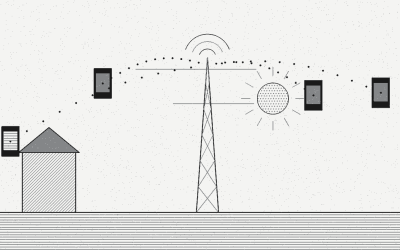
An electronic money balance is a claim on the issuer, matched by funds the issuer holds. A deposit converts an agent’s stock of e-float into a customer’s balance and hands the agent notes; a transfer moves balance between two customers without any cash appearing; a withdrawal reverses the first step, so the agent pays notes out and buys float back.
That is why the January gap matters. The average withdrawal was 16% larger than the average deposit, so each cash-out consumed more notes than each cash-in delivered. Agents in areas where deposits dominate accumulate cash they must bank; agents where withdrawals dominate must restock cash, and they do so against a network that the Resumo counts at 454,667 agents at the start of the year.
Wallets everywhere, terminals thin
The wallet has scale; the card and till network has not kept pace.
The same tables show 1,388 ATMs and 32,473 point-of-sale terminals in January, and 3,609,579 bank cards in circulation, against 25.0 million wallet subscribers counted by the Banco de Moçambique as a proxy for clients. That is roughly seven wallet accounts for every card. The agent network grew by about 8,000 outlets in a month, from the 446,604 recorded at the end of December.
A customer with a wallet and no card can still send money and cash out, but the till at the corner shop is not yet where most of the value goes. Bill and merchant payments were 7.7% of operations and 1.7% of value.
What a business does with this
Price for MT138 tickets and plan cash around the 1.6 ratio.
A biller, school or retailer whose average payment sits near MT138 should treat that figure as its design constraint. Fixed per-transaction costs that suit a MT5,000 card payment do not work at that size, so the winners will be businesses that negotiate merchant pricing, or collect through recurring debit-style prompts, at wallet scale.
A distributor with agent or cash-collection exposure should map float against the January pattern: notes flow into wallets faster than they flow out. The first action for Q2 planning is to ask each agent partner for its deposit-to-withdrawal ratio, and to read the February and March Resumos against the 1.64 baseline set here.
Sources
- Banco de Moçambique. “Resumo Mensal de Informação Estatística – Fevereiro de 2026”. March 2026. https://www.bancomoc.mz/media/pnag4dbn/resumo-mensal-de-informa%C3%A7%C3%A3o-estat%C3%ADstica-fevereiro_2026pdf.pdf
- Banco de Moçambique. “Boletim Estatístico Nº 267, Janeiro de 2026”. March 2026. https://www.bancomoc.mz/media/ta2lflao/boletim-estat%C3%ADstico-janeiro-2026.pdf
- Banco de Moçambique. “Resumo Mensal de Informação Estatística – Janeiro de 2025”. February 2025. https://www.bancomoc.mz/media/r3mbyucs/resumo-mensal-de-informa%C3%A7%C3%A3o-estat%C3%ADstica-janeiro_2025pdf.pdf
- Banco de Moçambique. “Resumo Mensal de Informação Estatística – Janeiro de 2026”. February 2026. https://www.bancomoc.mz/media/3nchnllu/resumo-mensal-de-informa%C3%A7%C3%A3o-estat%C3%ADstica-janeiro_2026pdf.pdf
- Club of Mozambique. “Mozambique: Digital mobile wallets replacing ATMs, sale payment terminals”. 30 March 2026. https://clubofmozambique.com/news/mozambique-digital-mobile-wallets-replacing-atms-sale-payment-terminals/