The June 2026 summary shows a stock that held at US$3.46bn and a ratio that lost nearly a third, and the gap between them is an import forecast.
The Banco de Moçambique (BdM) printed reserve cover of 2.2 months of total imports for both May and June 2026, against 3.1 months for April. Over the same weeks the stock of net reserves barely moved: US$3,470.1m at the end of April, US$3,496.6m at the end of May and US$3,463.8m at the end of June.
A stock that holds while the ratio falls by 29% means the denominator moved. Excluding large projects the same table gives 4.8, then 4.5, then 4.5 months, a change of six percent. What counts as monthly imports has been re-based upward for the total, and the ex-project view has hardly noticed.
Back-solving the denominator
Divide reserves by cover and the implied monthly import bill jumps 42% in one month.
Dividing US$3,470.1m by 3.1 months gives an implied monthly import figure of about US$1,119m for April. Dividing US$3,496.6m by 2.2 gives about US$1,589m for May. The ex-project version moves from about US$723m to about US$777m. The extra US$470m a month in the total therefore sits in the large-project column, which implies roughly US$812m a month in May against US$396m in April.
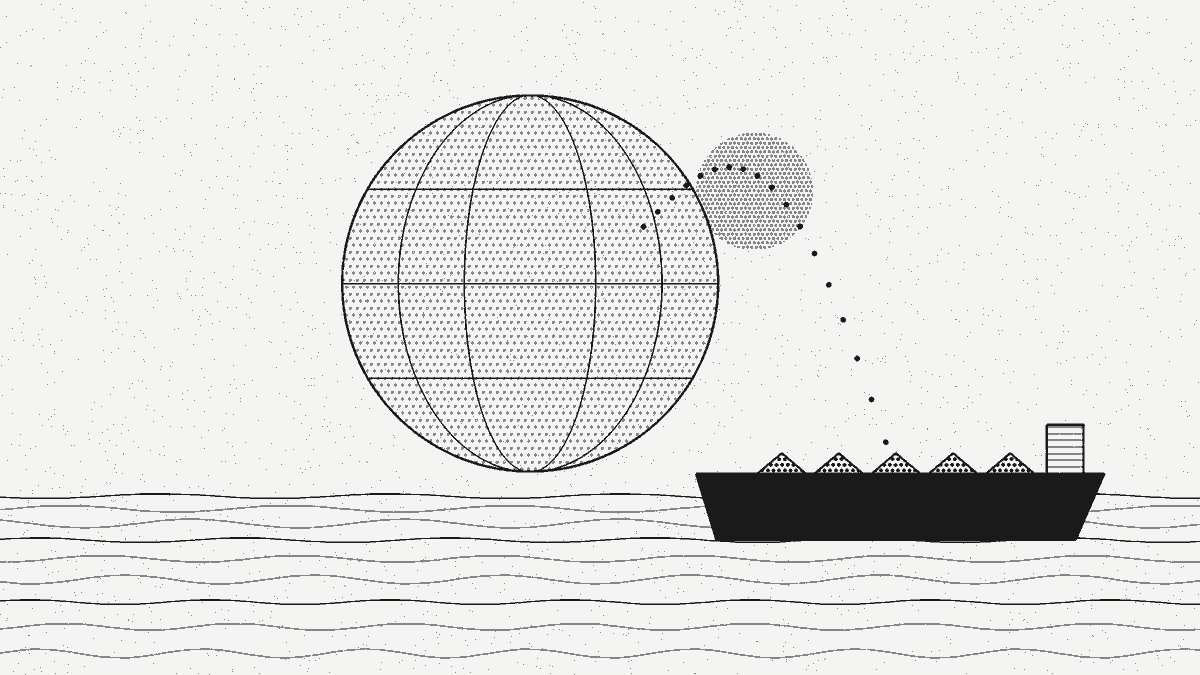
The BdM’s July summary does not explain the change, so the reading is arithmetic rather than a statement by the bank. A forecast that includes the import bill of the LNG projects would produce this shape, and that is the reading most consistent with the numbers.
Mechanism: what a cover ratio measures
It divides a stock of dollars by a rate of spending, so the answer changes when either the pool or the pace does.
The numerator is net international reserves, the pool that the central bank can draw on. The denominator is an average of imports, and the bank publishes two versions: one with the large projects, whose dollars come from their own financing, and one without. The second answers the question a domestic importer cares about, how long the pool would carry the rest of the economy.
Month by month the pool itself did little. In June the BdM table shows inflows of US$440.7m, including US$137.9m of State project receipts and only US$102.3m of provisioning by commercial banks, against outflows of US$445.6m that included US$72.0m of net exchange losses.
Two official messages, two bases
Public statements on cover use different measures, and a reader has to check which one.
In May 2025 the governor, Rogério Zandamela, told a SADC central bank meeting that cover was very much above five months, as Forbes África Lusófona reported. When the State repaid the IMF in March 2026, Jornal Económico records the governor again describing cover at that moment as practically five months.
Those statements sit beside a BdM table that gives 3.1 and then 2.2 months. They are not necessarily in conflict, since gross and net reserves, goods only and goods and services, and with or without large projects all yield different ratios. The note that accompanies each summary is the only place the basis is stated.
What to do with the ratio
Quote the ex-project figure to your board, and keep a personal cover metric on your own imports.
A finance director should present 4.5 months as the ex-project cover and describe the 2.2 as the total including project imports, then track a cover ratio of your own: your dollar payables for the next 90 days against the bank line you actually have. That number, not either of the BdM’s, decides whether an invoice gets paid on time.
Treasurers who borrow in dollars against export receivables should also ask their bank which cover measure it uses when it sets country limits, because a lender reading 2.2 months and a lender reading 4.5 months will price the same Mozambican counterparty differently. Put the question in writing before the next facility review, and keep the answer on file beside the covenant schedule, so that a later change of basis is visible the day it happens and not at renewal.
Sources
- Banco de Moçambique. “Resumo Mensal de Informação Estatística – Julho de 2026”. 6 August 2026. https://www.bancomoc.mz/media/ecnnb2u2/resumo-mensal-de-informa%C3%A7%C3%A3o-estat%C3%ADstica-julho_2026.pdf
- Jornal Económico. “Reservas internacionais de Moçambique voltam a crescer após recuo do pagamento ao FMI”. 14 July 2026. https://jornaleconomico.sapo.pt/noticias/reservas-internacionais-de-mocambique-voltam-a-crescer-apos-recuo-do-pagamento-ao-fmi/
- Forbes África Lusófona. “Moçambique possui reservas muito acima de cinco meses de importações, diz governador”. 18 May 2025. https://forbesafricalusofona.com/mocambique-possui-reservas-muito-acima-de-cinco-meses-de-importacoes-diz-governador/
- Banco de Moçambique. “Domínios e Indicadores Estatísticos”. https://www.bancomoc.mz/pt/areas-de-actuacao/estatisticas/dominios-e-indicadores-estatisticos/