A 39% reserve rule moved cash from the weekly auction to the reserve account, and banks began to borrow overnight.
Mozambican banks borrowed overnight from Banco de Moçambique (BdM) at 12.25% on every one of the 23 readings in July 2026, between MT 1.5 billion and MT 3.8 billion, an average of MT 2.95 billion a day. In April the same window had been used on one day. The deposit window, which pays 6.25%, was also used every day, with an average balance of MT 4.26 billion.
The change follows a rule rather than a rate. The Treasury bills that banks held under reverse repo with BdM stood at MT 224.7 billion on 5 May and MT 151.8 billion on 13 July, a fall of MT 72.9 billion, while bank reserves at the central bank rose MT 72.3 billion in May alone, ending the month at MT 308.9 billion after an April close of MT 236.6 billion. Cash left the weekly auction and went into a compulsory account.
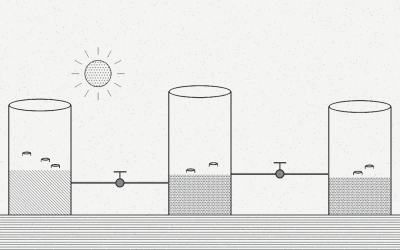
Cash moved from one drawer to another
Money that earned 9.25% for a week now sits in an account banks cannot choose to empty.
O Económico’s report of 29 July records the Comité de Política Monetária holding MIMO at 9.25% and the reserve requirement on metical liabilities at 39%, up from 29% earlier in the year. The central bank’s daily bulletins show what that did to the auction. On 5 May, before the decision, banks held MT 224.7 billion of Treasury bills under reverse repo with BdM. By 13 July the figure was MT 151.8 billion.
A reverse repo is a choice, because a bank decides each week how much spare cash to lend to BdM. A reserve balance is not a choice. When the requirement rose ten points, cash that banks used to volunteer was absorbed by rule, and the weekly ticket had less left to collect.
Long and short in the same month
Both windows were busy every day, which points to uneven holdings rather than a shortage.
The permanent facilities series has 23 July readings for each window. The deposit side ranged from MT 1.6 billion to MT 6.2 billion, and the lending side from MT 1.5 billion to MT 3.8 billion, above MT 3 billion on 13 of the 23 days. Some banks therefore ended nights with cash while others ended them without it.
The 13 July bulletin shows how that happens. The average effective reserve ratio on metical liabilities was 37.63%, against the 39% requirement, and the gap to requirement on average balances was minus MT 8,984 million. Interbank cash was thin, with one overnight repo borrower and two lenders trading MT 800 million at 9.25%. That bulletin prints the lending and deposit balances for the day the opposite way round to the series file, so we rely on the series’ pattern across the month, which is unaffected.
What the squeeze cost
Each night of borrowing cost three percentage points more than the policy rate.
Borrowing MT 2.95 billion a day at 12.25% rather than 9.25% costs about MT 88 million a year, by our arithmetic, if the average held. That sum is small beside a MT 308.9 billion reserve stock. It is, though, a price that falls on individual banks, and the ones paying it have an incentive to raise loan fees or to hold cash instead of lending.
The June monthly summary dates the shift to May, the month of the decision. Net central bank credit to government eased from MT 163.1 billion to MT 159.4 billion, while government deposits at BdM fell from MT 280.4 billion to MT 203.3 billion, so the State drew down its own balance as banks’ reserves swelled.
What a finance director does now
Treat funding as unevenly spread, and secure it before it is needed.
A company that relies on an overdraft should ask its bank for a committed line, with a stated limit and fee, instead of an uncommitted overdraft. A bank that is borrowing at 12.25% to meet reserves will trim uncommitted lines first. Ask also whether your bank sits on the long side or the short side of the reserve account, since that decides who prices a short-notice request generously.
A treasurer holding surplus meticais should compare an overnight placement with a 91-day bill, since a bank short of cash values stable funding and may pay for it. In August, watch whether window use stays near MT 3 billion a day. If it does, the squeeze is structural and loan pricing will follow it.
Sources
- Banco de Moçambique. “Série Facilidades Permanentes”. https://www.bancomoc.mz/media/04zojueo/s%C3%A9rie-facilidades-permanentes.xlsx
- Banco de Moçambique. “Diário dos Mercados, 13 de Julho de 2026”. 13 July 2026. https://www.bancomoc.mz/media/olgjchl1/di%C3%A1rio-dos-mercados-13-07-2026.pdf
- Banco de Moçambique. “Diário dos Mercados, 5 de Maio de 2026”. 5 May 2026. https://www.bancomoc.mz/media/wfboylmp/di%C3%A1rio-dos-mercados-05-05-2026.pdf
- Banco de Moçambique. “Resumo Mensal de Informação Estatística, Junho de 2026 (dados de Maio)”. June 2026. https://www.bancomoc.mz/media/athimwmy/resumo-mensal-de-informa%C3%A7%C3%A3o-estat%C3%ADstica-junho2026.pdf
- O Económico. “Banco De Moçambique Mantém MIMO Em 9,25% E Transfere Aperto Para A Liquidez Bancária”. 29 July 2026. https://www.oeconomico.com/banco-de-mocambique-mantem-mimo-em-925-e-transfere-aperto-para-a-liquidez-bancaria/